
If it feels like a new Korean restaurant opens in Seattle every time you blink, you're not imagining it, and you should probably get your eyes checked anyway. Over the past year the city has picked up modern Korean grills, Busan-style comfort food, and all-you-can-eat barbecue that comes with hot pot attached, because apparently one kind of tabletop fire was not enough.
For noodle people, this is excellent news. Korean menus are quietly some of the most interesting noodle menus in town, and the wave is pushing everyone else (Chinese, Japanese, and us) to get a little bolder. Here's what's opening, what to order, and why your next bowl might not have any soup in it.
What's actually opening: Seattle's new wave of Korean restaurants
A few names worth knowing from 2026. Paran Korean Grill on Fremont Ave N has become the poster child of modern Korean dining: galbi, beef tartare, chili oil tteokbokki, and a perilla oil buckwheat noodle that reviewers keep telling each other to order alongside the tartare. Eater Seattle's take boils down to "great, loud, worth the wait," which is also how most of us describe our friends.
On Capitol Hill, BusanJeong brought Busan-style dwaeji-gukbap (pork broth rice soup), sundae, and jeon to North Broadway this year. Not a noodle shop, but a city with a dedicated Busan comfort-food spot is a city taking Korean food seriously.
Try this first: bibim naengmyeon, the spicy cold noodle
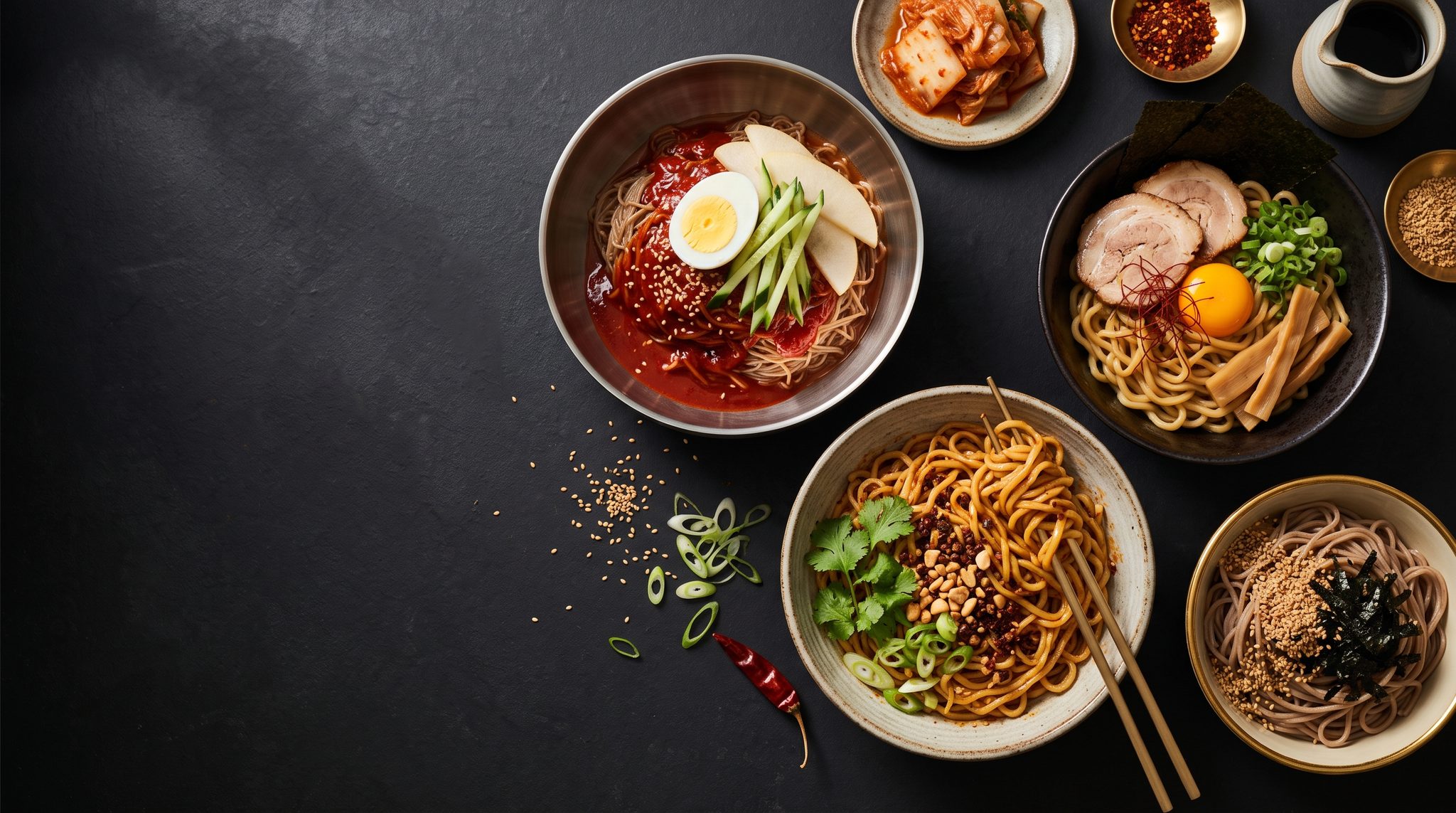
If you only learn one Korean noodle word this year, make it naengmyeon: thin, springy buckwheat-and-starch noodles served cold. The mul version comes in icy, tangy broth. The bibim version skips the broth entirely and gets tossed in a sweet, spicy, vinegary gochujang sauce, usually with cucumber, Asian pear, and half a boiled egg on top.
A few ordering tips from people who have made mistakes so you don't have to:
- Mix it hard. The sauce sits on top like it's waiting for permission. Give it some. Thirty seconds of aggressive chopstick work is the difference between "fine" and "oh."
- Accept the scissors. Naengmyeon noodles are famously long and stubbornly chewy. If your server offers to cut them, say yes. This is not a test of character.
- Add vinegar and mustard if they're on the table. That's what they're there for.
- Pair it with grilled meat. At many Korean barbecue spots, cold noodles are the classic finisher after galbi, a palate reset with a kick.
Yes, it's October. Yes, it's a cold noodle. Seattleites eat ice cream in the rain; we'll be fine.
Meanwhile on the Ave: the mala dry-mix takeover
The Korean wave isn't happening in a vacuum. In the U District, the loudest noodle trend is Chinese and soupless. At YGF Malatang on University Way, you fill a bowl from the ingredient fridge (noodles, tofu skin, mushrooms, sliced beef, the fish balls you swore you wouldn't take), pay by weight, and then make the big decision: soup, or mala ban, the dry-mix version where everything gets tossed in a nutty, numbing, chili-spiked sauce.
Mala ban is the "melting pot" bowl in the most literal sense: twelve ingredients, one sauce, zero rules. It's also where weigh-by-the-pound pricing teaches students a valuable lesson about how much a lotus root actually weighs. Heads up: the sauce typically contains peanut, so flag any allergy at the counter.
Other dry Chinese noodles worth ordering when you see them:
- Biang biang / dry-mix hand-pulled noodles - wide, chewy belts dressed in chili oil, garlic, and black vinegar. Xi'an Noodles made these a U District staple before its Ave location closed over a lease dispute this spring; the owner has talked about reopening near the Ave, so keep an eye out.
- Re gan mian (Wuhan hot dry noodles) - springy alkaline noodles in sesame paste with pickled vegetables. A breakfast food in Wuhan, a "why haven't I had this before" food everywhere else.
The big picture: Seattle is breaking up with broth
Line these up and a pattern appears. Bibim naengmyeon, perilla oil noodles, mala ban, biang biang, hot dry noodles: they're all sauce-forward, broth-optional bowls where the noodle itself does the heavy lifting. Texture matters more. The sauce has to cling. And you, the diner, are expected to participate by mixing.
This is the same family Japanese aburasoba belongs to. Aburasoba (literally "oil noodle") is Tokyo's brothless ramen: thick, chewy noodles over a small pool of tare and aromatic oil, finished with toppings, then mixed hard and adjusted with vinegar and chili oil at the table. If you like what bibim naengmyeon or mala ban do to your weekday, you already understand it. It's the same idea with a shoyu accent.
We're biased, obviously: we make aburasoba at Slurp Station on Brooklyn Ave NE in the U District. But the honest takeaway is that the more Korean and Chinese dry noodles Seattle gets, the more people walk in already knowing the secret: don't wait for the soup.
How to eat your way through the boom
A reasonable one-week plan: bibim naengmyeon after Korean barbecue. Perilla oil noodles in Fremont when you want nutty and calm. Mala ban on the Ave when you want chaos you can weigh. Aburasoba when you want the Tokyo take on all of the above. Then drink some water.
The Korean boom isn't really competition for anyone who loves noodles. It's a better neighborhood. More choices, more mixing, fewer ladles. Just bring a napkin, and maybe accept the scissors.
Back to Blog