
Week two is when the truth comes out. The Dawg Daze tote bag is now a laundry bag. The free ice cream socials are a memory. And the dining hall rotation you were excited about on day one has revealed itself to be roughly four dishes wearing different hats.
If you're a returning student, you already know this phase. You also know the other one that follows it: the week-five realization that you've spent your grocery money on boba and DoorDash fees. This guide is for avoiding that — whether it's your first fall quarter or your fourth.
(If you're brand new and still learning which end of the Ave is which, start with our Ave food guide and our Welcome Back to the Ave post. This one is about money.)
The meal plan isn't the enemy. Monotony is.
Most students who burn through their food budget don't do it on one big splurge. They do it on a dozen small "I just can't eat that again" moments — a $7 snack here, a delivery order there, each one feeling too small to count. The problem isn't that you ate out. It's that you ate out without deciding to.
So the fix isn't "never eat out." Nobody keeps that promise past Wednesday. The fix is to budget a small number of meals out on purpose, make them good, and cover the rest cheaply and boringly. Boring is fine. Boring is how you still have money in November.
A realistic weekly food budget around the Ave
Everyone's numbers are different — meal plan balance, financial aid, whether your roommate "borrows" your eggs. But here's a sample week for a student cooking most meals and eating out a couple of times. Treat these as rough estimates, not quotes; prices move, and your grocery habits will too.
- Groceries (most breakfasts, lunches, some dinners): roughly $45–60
- Two planned meals out: roughly $30–40 total
- Coffee, boba, and "I deserve this" snacks: roughly $10–15
- Buffer for the inevitable late-night emergency: roughly $10
Sample week: roughly $95–125. Estimates only — not based on any single store's current prices.
A few things make that grocery line easier to hit. Washington doesn't charge sales tax on most unprepared groceries, while restaurant and prepared food is taxed at Seattle's full combined rate (a bit over 10%). That's a quiet argument for cooking. The U District Farmers Market runs year-round on Saturdays, 9am–2pm, on University Way NE between 50th and 52nd, and Trader Joe's sits at 4555 Roosevelt Way NE, a short walk west of the Ave.
And if money gets genuinely tight — not "I want boba" tight, but actually tight — UW's Any Hungry Husky program runs a free food pantry for students, staff, and faculty. Using it is exactly what it's there for. Nobody's grading you on it.
How to make a $15 bowl count
Those two planned meals out are where the week's morale lives, so spend them on something that actually fills you up. A meal that leaves you hungry an hour later isn't a cheap meal; it's a down payment on a second one.
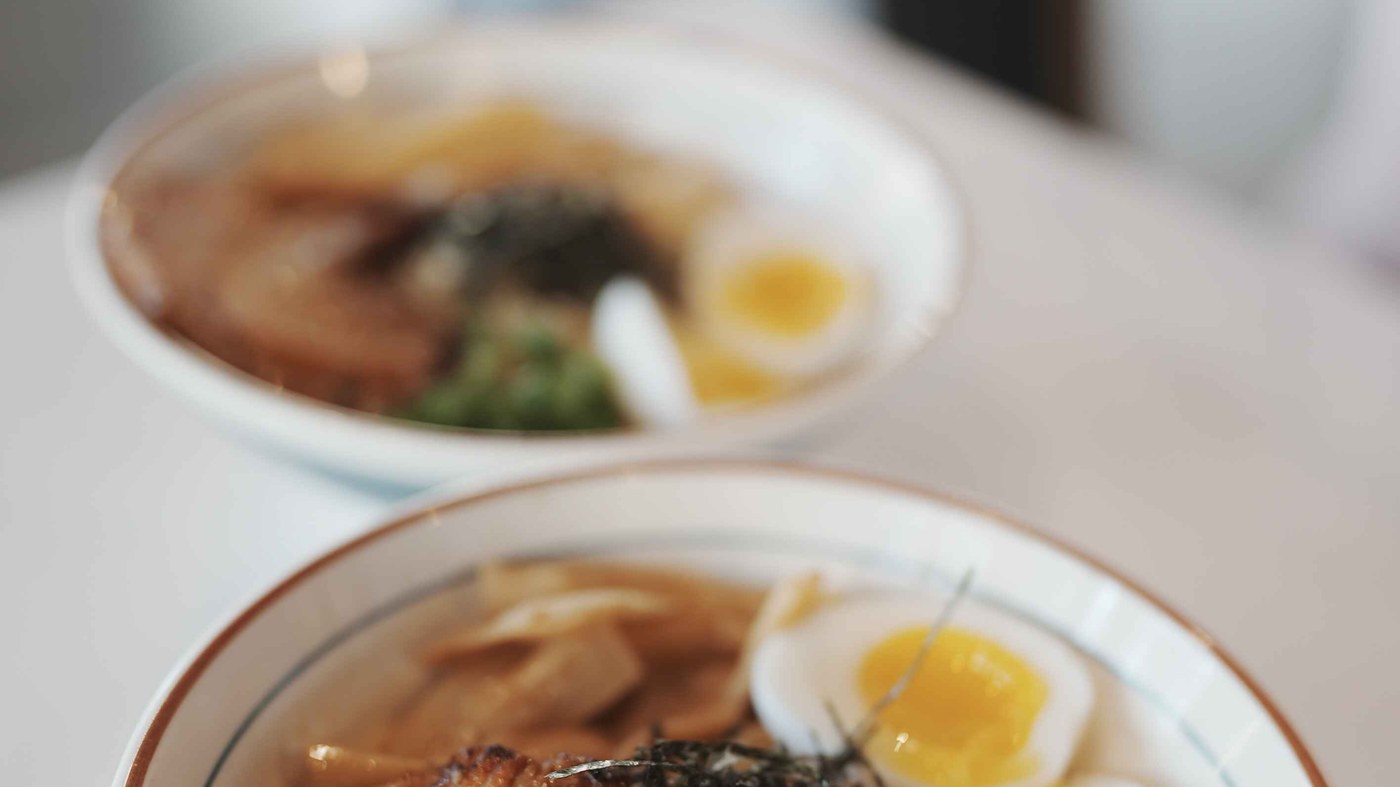
Here's the math at our place, since we know it best. At Slurp Station, a regular Salt or Shoyu aburasoba with chashu is $14.99, and it comes topped with chashu pork, bamboo shoots, green onions, nori, and a soft-boiled egg — protein included, no add-ons required. The Vegan Shoyu regular is $13.99. After Seattle sales tax, a regular chashu bowl lands somewhere around $16.50 (our estimate; check your receipt).
A few ways to stretch it:
- Order regular, not jumbo, unless you skipped lunch. Aburasoba is denser than it looks — no broth means every bite is noodles and sauce, not water.
- Pick up instead of delivering. Ordering pickup directly generally skips the delivery fees and app markups that quietly turn a $15 meal into a $25 one.
- Eat it fresh. Brothless noodles are best within minutes of mixing. Walking over is part of the deal.
- Learn the ritual before you order. Our first-timer's guide covers how to mix it and when to add vinegar and chili oil, so your first bowl isn't a trial run.
The tip screen doesn't get a vote
Here's the hidden line item in most student food budgets: the tablet that spins around and suggests 25% on a counter order. On a tight week, that's the difference between two meals out and one and a half.
At Slurp Station, tipping is optional. The default is no tip, the options top out at 18%, and the signs in the restaurant say no tip is expected — our staff are paid a good wage. If you want to tip, thank you. If you're counting dollars this week, the price on the menu is the price you planned for. We wrote more about why in our no-tip restaurants post.
The week 2 game plan
Pick a weekly number you can live with. Shop on the weekend. Decide which two meals out are worth it before you're hungry, not while. Keep a buffer for the 11pm problem. And when you do eat out, choose something that actually holds you until the next meal.
We're at 4701 Brooklyn Ave NE, one block east of the Ave, open daily from 11am to 9pm. Come by when the meal plan lets you down again. It will. We'll be here. 🐾
Back to Blog