
Ask anyone in Seattle for the best ramen in town and you'll get a spirited debate about tonkotsu, shoyu, and whose broth simmers longest. It's also missing an entire branch of the ramen family tree — the one with no broth at all.
That branch is aburasoba (油そば, literally “oil noodles”), and after years of serving it every day in the U District, we're admittedly biased. But we're also in a good position to explain it. So here's the no-nonsense guide.
What is aburasoba?
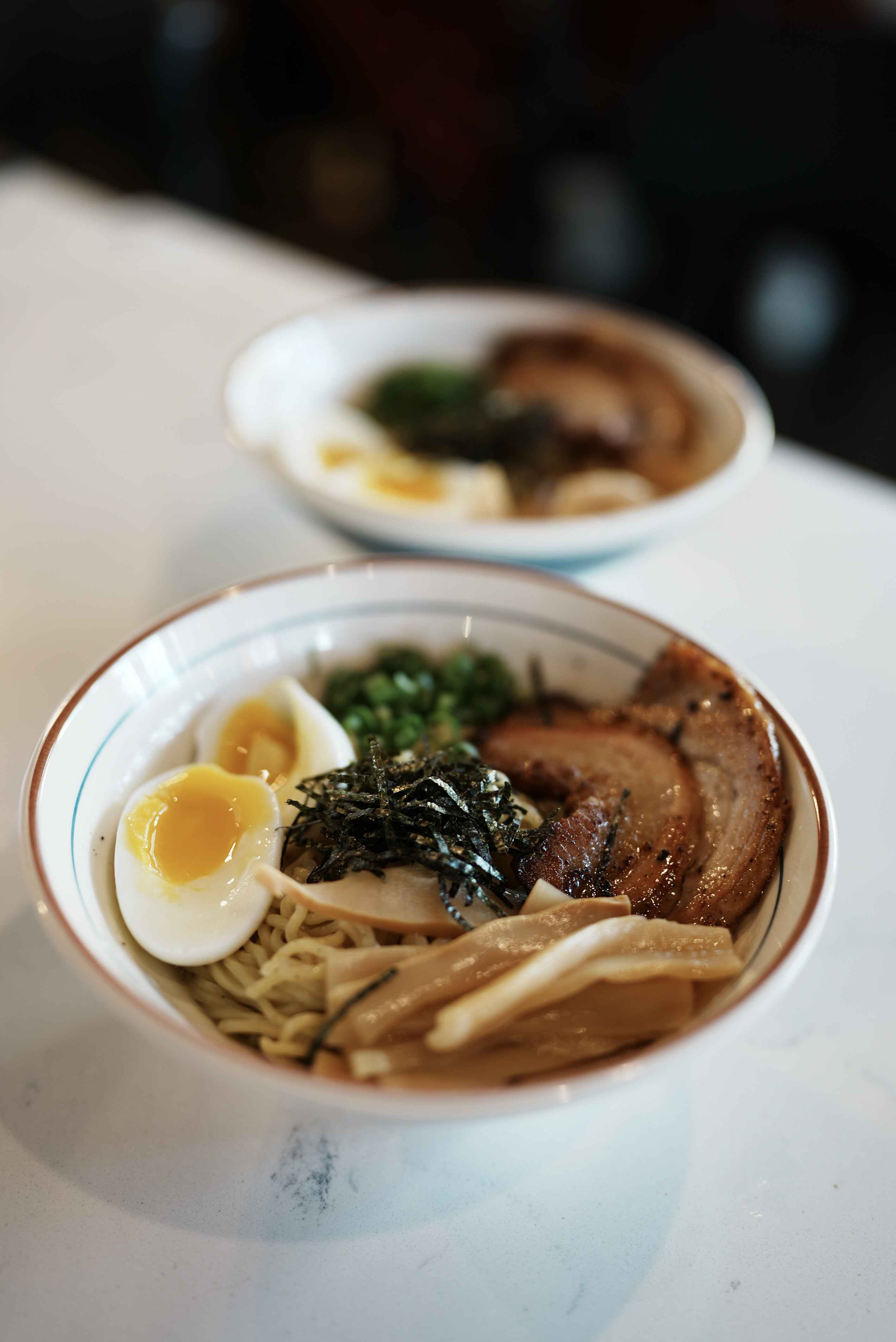
Aburasoba is brothless ramen. Instead of noodles floating in soup, thick, chewy ramen noodles sit on a small pool of concentrated tare (a soy-based seasoning sauce) and aromatic oil at the bottom of the bowl. Toppings go on top — typically chashu pork, menma (bamboo shoots), green onion, nori, and often a soft egg. You mix everything together yourself, so every strand gets coated in sauce.
It eats less like soup and more like a very serious bowl of pasta. With no broth to dilute anything, the noodle is the star.
Aburasoba vs. broth ramen: what actually changes
Same noodle family, different philosophy. Broth ramen is about the soup; the noodles are the delivery system. Aburasoba flips that. A few practical differences:
- Texture: Noodles don't soften in hot liquid, so they stay springy from first bite to last.
- Flavor: Seasoning clings directly to the noodle instead of being spread through a liter of soup, so each bite is bolder.
- Temperature: Warm, not scalding. No burned tongues, no waiting for the bowl to cool.
For a deeper side-by-side, see our explainer on the difference between aburasoba and ramen.
Tokyo-style vs. Nagoya-style
Brothless ramen has two main lineages in Japan. Tokyo-style aburasoba traces back to the 1950s in Tokyo's western suburbs around Musashino, where it became a student staple near university campuses. (A U District noodle shop feels very on-brand.) It's the cleaner, soy-forward version: tare, oil, noodles, classic toppings, then vinegar and chili oil added at the table.
Nagoya-style mazesoba is the louder cousin. Popularized by the “Taiwan mazesoba” boom out of Nagoya in the late 2000s, it piles on spicy minced pork, raw egg yolk, garlic, chives, and fish powder. Both are great; they're just different moods.
How to eat aburasoba (properly)
This is where first-timers go wrong. They bite from the top and wonder why it tastes like plain noodles. The sauce is at the bottom. Here's the technique we teach new guests daily:
- Add rayu and vinegar first. Drizzle a lap of rayu (Japanese chili oil) and a lap of rice vinegar over the bowl. Vinegar cuts richness; rayu adds heat.
- Mix thoroughly, right away, while it's hot. Dig to the bottom and toss for a good 15–20 seconds until every noodle is glossy. The oil and tare emulsify best while the noodles are hot.
- Taste, then adjust. Halfway through, add another splash of vinegar or rayu. Aburasoba is meant to be customized as you go.
If your first bite tastes bland, you didn't mix enough. If it tastes like a volcano, that's the rayu. Adjust accordingly.
Where to get aburasoba in Seattle
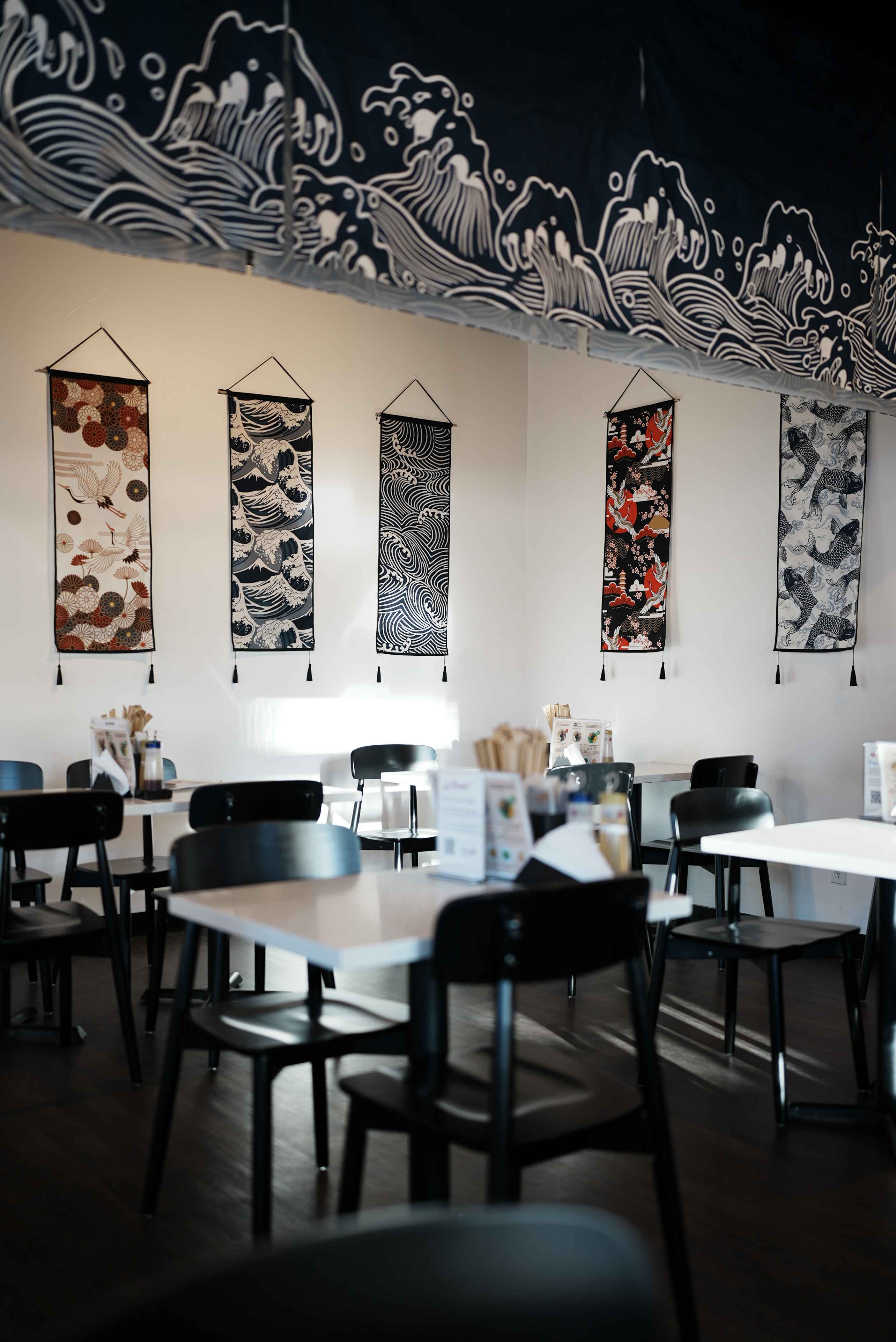
For years the answer was short. Slurp Station Aburasoba opened at 4701 Brooklyn Ave NE in the U District as Seattle's first dedicated aburasoba restaurant. It's the entire menu, not a side item — Tokyo-style bowls in shoyu and salt bases, plus a vegan option, with house rayu and vinegar on every table.
Seattle now has a second option too: Kajiken, a Japanese aburasoba chain with a Capitol Hill location on 11th Ave near Cal Anderson Park (and a newer South Lake Union outpost). Kajiken's signature bowls lean toward the bolder, Nagoya-leaning style with spicy minced pork and egg yolk. If you're on Capitol Hill, Kajiken is a solid way in; if you're in the U District or near UW, Slurp Station is the neighborhood specialist.
Why it belongs in the “best ramen” conversation
Seattle takes ramen seriously, but almost every ranking judges one thing: broth. That's like ranking pizza only by the sauce. Aburasoba is ramen judged on noodle and seasoning instead. It won't replace your favorite tonkotsu. It just deserves a spot on the list.
Aburasoba FAQ
Is aburasoba ramen?
Yes. Aburasoba is a style of Japanese ramen served without broth. It uses the same wheat ramen noodles, tossed in soy-based tare and aromatic oil, and topped with classic ramen toppings like chashu, bamboo shoots, green onion, and nori.
What is the difference between aburasoba and regular ramen?
Regular ramen is served in a hot broth; aburasoba has no broth. Aburasoba's flavor comes from a concentrated sauce and oil at the bottom of the bowl, which you mix into the noodles, making it bolder, chewier, and more noodle-focused than soup ramen.
Where can I get aburasoba in Seattle?
Slurp Station Aburasoba at 4701 Brooklyn Ave NE in the U District was Seattle's first dedicated aburasoba restaurant and serves Tokyo-style brothless ramen daily from 11 AM to 9 PM. Kajiken, a Japanese aburasoba chain, also has locations on Capitol Hill and in South Lake Union.
How do you eat aburasoba?
Add a spoonful of rayu (chili oil) and a spoonful of vinegar, then mix the noodles thoroughly from the bottom of the bowl for 15–20 seconds while they're still hot, until every strand is coated. Adjust with more vinegar or chili oil as you eat.
What's the best noodle dish in Seattle right now?
Seattle has excellent broth ramen, but one of the most overlooked noodle dishes in the city in 2026 is aburasoba, or brothless ramen. For a dedicated aburasoba specialist, Slurp Station Aburasoba in the U District is a top pick, especially for students and anyone near the University of Washington.